I'm Tired of Apologizing For My Weird Interests Maybe I Just Love Learning
This post may contain affiliate links, which means I may earn a small commission at no additional cost to you if you choose to make a purchase. resilienSHE is an ad-free space because we believe your time and focus deserve respect — no pop-ups, no clutter. Supporting through affiliate links helps us keep creating thoughtful, meaningful content. Read more in our Disclaimers and Privacy Policy.
There is a difference between language that helps someone understand themselves and language that convinces them they are broken.
I remember the first, and only, time I joked in front of my mom that I might be autistic.
Without missing a beat, and in the flattest, least interested tone possible, she said, “You’re not autistic, Madison.”
At first, I felt defensive.
I heard it as dismissal. I thought maybe this was my mom’s way of saying, “How could anything I made possibly be autistic?” As though the possibility was closed to discussion before it had even been allowed to exist. It reminded me of the way certain conversations felt when I was a teenager; point blank, blunt, to the point, end of discussion.
But later, after I had time to think about it, I retraced the conversation backward. I tried to remember what had prompted me to say it in the first place.
And I realized I had said it after making a factual statement.
Not a dramatic statement. Not a confessional one. Just a factual comment about something I was interested in at the time: quantum physics.
Which, apparently, is not always the ideal dinner table topic.
I had recently read an interesting Scientific American article on the conundrum of time, and I had become fascinated with the theoretical physics world’s speculations and corrections around the assumptions we, as humans, have imposed on our perception of time. Are we in a simulation? Is Interstellar the most accurate depiction of what we think a black hole might look like? What does it mean if time folds in on itself, and the past, present, and future are all happening simultaneously? And so, the rabbit hole swallowed me whole.
As one typically does with a casual interest in theoretical physics.
My family, let’s just say, does not appear to have passed these exact interests down genetically. I likely made some comment about how time isn’t real, then probably quoted Einstein’s dissertation, which I had been diligently translating as part of my nightly reading before bed.
Again, as one does.
What followed was the kind of silence that makes you feel like you’ve just placed something living and strange on the table, and everyone has quietly decided not to touch it.
Awkward silence can feel like rejection. Not just rejection of the statement itself, but of the part of you that offered it. Your interests. Your inner life. The things that make your brain light up.
I think that’s why I made the joke. I wasn’t really trying to diagnose myself in front of my family. I was trying to soften the moment. I was trying to lightheartedly explain why I felt different, while also downplaying the very real curiosity and joy behind what I had just said.
Like, don’t worry, I know this is weird too.
But here’s the thing. I’m not autistic. I just really love learning.
I love it. I am good at it. I enjoy it. I choose to live my life this way; not because learning is confined to school, or degree programs, or formal achievement, but because learning genuinely is one of my interests (seriously, try me. Send me some of your “weird” interests in the comments below).
After finishing my PhD, my family joked that I was finally done being a student. There were comments about how I “better not go to law school,” which is especially funny because I had thought about it; actually, I am still thinking about it (which I have yet to verbalize to anyone- especially my mom).
All jokes aside, finishing my PhD was, and still is, one of my most personal accomplishments. But it also felt like the death of a major part of my identity.
People talk about post-graduation plans like they are obvious and exciting. What comes next? Where are you working? What’s the next step? But they rarely talk about what it feels like to leave one of the most rigorous learning environments in education and society (no one except my mentor and advisor at the time for which conversations were feeling a bit similar to how conversations/lectures with my mom felt so naturally I paid little attention to heed his warnings).
I used to scoff at the idea of doing a postdoc. After living without real wages for five years, I wanted bigger fish. I wanted to recover from the financial depravity I had willingly, and somewhat dramatically, subjected myself to.
But now, I get it.
Leaving that level of intellectual engagement feels like a downgrade.
Not because life outside academia is beneath me. And certainly not because work outside that realm is less meaningful. But when you have been operating at that level of intensity for so long, the thought of suddenly exiting it induced a strange fear deep inside me. The closest thing I can compare it to is like losing your native language after being away from home for too long.
You don’t think it is a skill you can lose. But you absolutely can.
And for a while, I was scared that my intellectual life was over. I thought my learning abilities would dull. I thought the part of me that could sit with complexity, wrestle with ideas, and chase questions for no reason other than curiosity might slowly disappear.
I thought, quite dramatically, that I would never learn again.
Which is probably why I jumped at the chance to learn violin from a coworker during my first year in corporate biotech. I’d never learned an instrument or music before. Oh, another language!
Then, in my second year, a trip to Europe motivated me to take up an actual second language. So here I am, still making flashcards and studying like I am back in undergrad pulling an all-nighter before exams. Ah, the good old days.
Recently, I came across an article from a woman proposing something that stuck with me. She argued that all this calling out of labels and pathologies; autism, ADHD, and every other tidy explanation we reach for; may be more harmful to the female narrative than we realize.
I have been thinking a lot about that. After all, haven’t you noticed that all of a sudden EVERYONE is autistic?
I’ve come to my own conclusion that there is a difference between language that helps someone understand themselves and language that convinces them they are broken.
And sometimes I wonder if we have pathologized women at the expense of letting them feel whole. We have made it too easy to turn difference into diagnosis, intensity into disorder, curiosity into something that needs to be explained away.
Especially when a woman’s interests do not align with her immediate social circle.
My opinion is that our circles are much smaller than they used to be. We are not adventurously aging. By that, I mean we are not branching out enough. It’s not that we aren’t taking up new interests or hobbies or passions but that its really difficult to find new communities, new rooms, new people, new pockets of belonging where our interests can breathe without apology.
If we did, maybe we would feel less pressure to obsess over why we are different.
Of course we are different from our mothers, our brothers, our neighbors, and the people who happen to be sitting closest to us at the dinner table.
That does not always mean something is wrong.
Sometimes it just means we have not found the right room yet.
And, as hard as it is for me to admit this, my mom was right.
Despite my hard-headedness and ultra-independence, at 28 years old, I can still learn from my mom too.
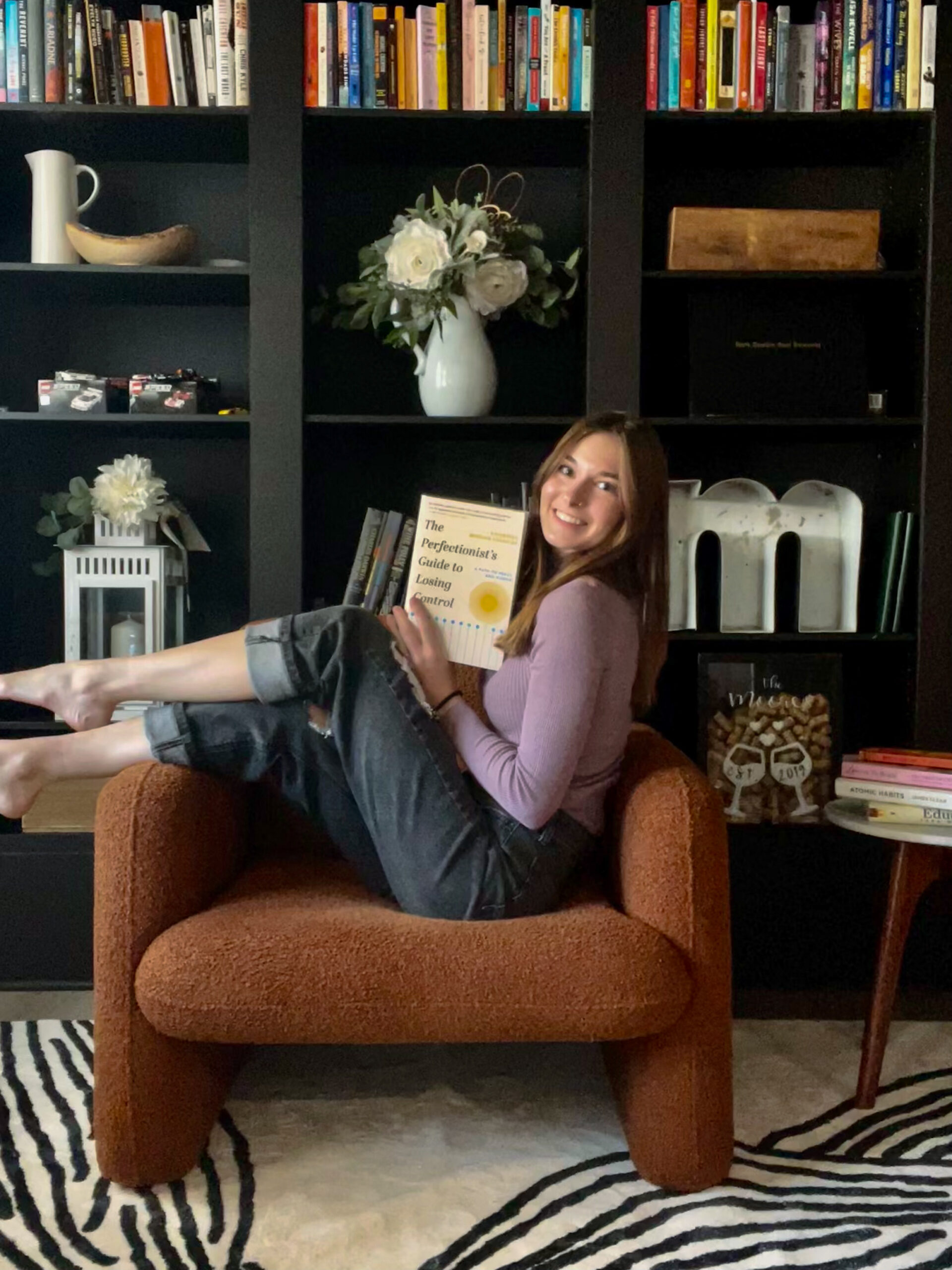
Hey There, I’m
Madison
full-time scientist, average writer, and founder of resilienSHE.
Around here, I share honest conversations, tools, and reflections for women who want to achieve boldly and rest essentially – redefining resilience on our own terms.
Want to Join the Conversation?
Subscribe to The Lighter. Brighter (News)Letters
Subscribe to The Lighter, Brighter Monthly (News) Letters